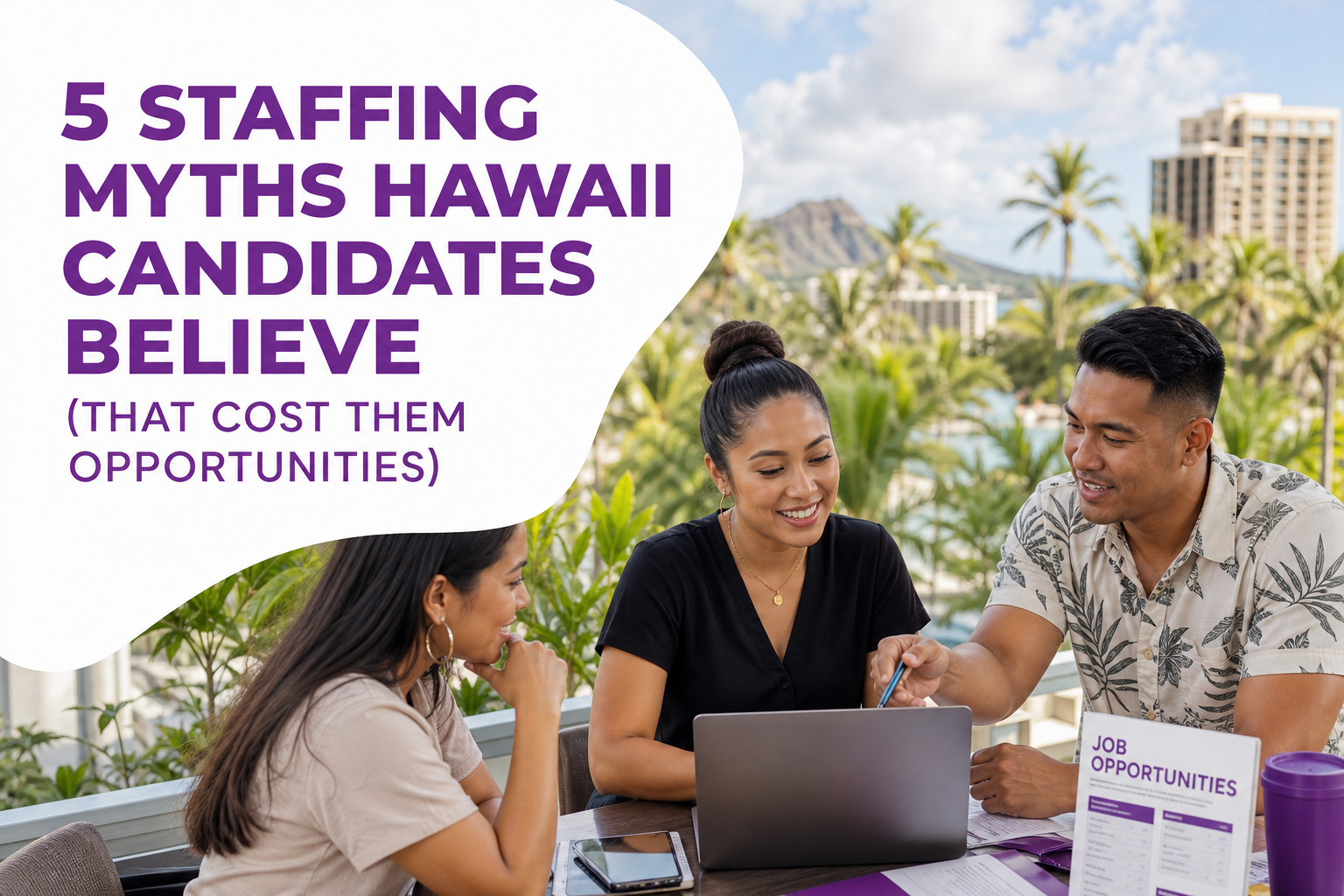
5 Staffing Myths Hawaii Candidates Believe (That Cost Them Opportunities)
If you’re a Hawaii recruiter or hiring manager trying to coach candidates effectively, this guide is for you. It targets candidates in Hawaii who miss opportunities because of common staffing myths they hold about work history, skills, and fit. Practitioners in this space notice that debunking these myths early, before interviews or offers, dramatically improves match rates and retention. In our experience, clear guidance helps candidates present themselves more accurately and employers make better hiring decisions.
Myth1: A perfect resume is the only ticket to Hawaii job opportunities
Many Hawaii candidates believe that a flawless past with a straight work history guarantees success. In reality, hiring teams weigh a combination of skills, relevant experience, and potential, not just a flawless resume. Focus on concrete work history details, relevant qualifications, and transferable skills. For example, in Hawaii’s diverse industries, employers value hands-on experience and demonstrated adaptability just as much as formal resumes.
Consider how to present experience beyond a simple chronology. Emphasize measurable results, practical certifications, and examples of how you solved real on-the-job challenges. For jobseekers, aligning background with the actual duties of the role matters more than an uninterrupted work sequence. To gain broader insight into how work history is interpreted across Hawaii, read about why workforce planning looks different across the Hawaiian Islands.
Myth2: Hawaii employers only hire for local cultural fit
While culture fit is important, it’s not the sole criterion. Hawaii employers also assess adaptability, safety awareness, and practical capability to perform the role. Candidates who can demonstrate how they fit the job requirements, such as relevant safety training for trades or customer-service experience for support roles, tend to stand out. Teams that succeed here typically show a track record of applying skills in real work scenarios rather than relying on personality alone.
To understand how culture-fit factors into hiring decisions and how to present this alignment, explore our content on Hiring for Culture Fit Archives and consider tailoring examples to the Hawaii work environment. A practical approach is to compile short, role-specific anecdotes that illustrate collaboration, reliability, and problem-solving in prior roles.
Myth3: Certifications alone guarantee job opportunities
Certs are valuable, but they’re not a substitute for demonstrated performance. Employers want to know you can apply what you’ve learned to real tasks. In Hawaii, where hands-on capability often matters in trades and service roles, pair certifications with concrete work history or project outcomes. Show how you’ve used those credentials on the job to improve efficiency, safety, or customer outcomes.
Think beyond the certificate and deliver a brief, results-focused narrative: what problem you faced, what steps you took, and what the outcome was. If you’re unsure how to frame this, a practical step is to map your certifications to specific job duties in your target roles. For a broader view of workforce planning in Hawaii and how credentials fit into planning, you might review Q1 Hiring Check-In: Is Your Hawaiʻi Workforce Plan on Track?.
Myth4: Job hopping hurts chances in Hawaii
Frequent job changes can raise questions about reliability, but there are legitimate reasons for moves, advancement, project-based work, or brief stints to fill critical needs. The key is to frame each transition with purpose: what you learned, how you added value, and why you’re seeking stability in the new role. Candidates who present transitions as deliberate career steps tend to be viewed more positively.
Craft a narrative that links each move to skill-building and problem-solving relevant to the roles you’re pursuing. This approach helps hiring teams see continuity in your growth rather than a pattern of inconsistency. For insights on Hawaii-specific workforce dynamics, see our discussions on regional planning and hiring considerations linked above.
Myth5: Size of the company or the job title determines fit
Some Hawaii candidates assume that only large organizations or high-title roles will provide meaningful opportunities. In reality, smaller employers value practical experience, reliability, and the ability to contribute across multiple tasks. A strong background in work history, hands-on skills, and a track record of delivering results often translates into success in smaller teams where versatility matters more than a big-name badge.
To translate this mindset into action, tailor your application to demonstrate how your background maps to the specific duties of the position, regardless of company size. Our team has observed that a focused, results-oriented presentation resonates across Hawaii’s varied employers. For additional context on how workforce planning adapts across the islands, revisit Why Workforce Planning Looks Different Across the Hawaiian Islands.
Find the Right Opportunity for Your Skills
Myth-busting: A practical, implementable path for candidates
Now that you understand the myths, here’s a concrete, step-by-step framework you can apply right away to remove these barriers and unlock opportunities in Hawaii:
-
Map your work history to the job you want: Create a two-column sheet listing each past role and the exact responsibilities, skills, and outcomes that align with your target positions. Include certifications and relevant training that apply to the role.
-
Develop role-specific anecdotes: Prepare3, 5 concise stories that illustrate problem-solving, teamwork, safety, and reliability in contexts similar to the roles you’re pursuing.
-
Bridge gaps with context: If a certification is dated or the role is not a perfect match, explain how the skill translates to the new job and the concrete value you bring.
-
Ask for a targeted referral: Reach out to someone who can vouch for your practical capabilities in a Hawaii setting and request a recommendation that highlights relevant experience.
-
Audit your application materials: Ensure every resume, cover letter, and online profile maps to the job duties, uses Hawaii-specific terminology, and avoids generic phrasing.
If you’d like deeper support, Bishop & Company offers tailored guidance for Hawaii candidates seeking meaningful opportunities. For direct support with job positioning and market-fit, consider contacting us or exploring our Hawaii job resources.
Internalizing these myths and applying the framework above can increase your visibility and improve outcomes in Hawaii’s competitive job market. For related strategic planning and local market insights, review our practical resources on workforce planning and Hawaii employer choices:
Discover how Hawaii employers approach staffing differently by reading Why Workforce Planning Looks Different Across the Hawaiian Islands, and stay informed with our quarterly hiring checks in Q1 Hiring Check-In: Is Your Hawaiʻi Workforce Plan on Track?.
Find Candidates Who Fit Your Needs
FAQ
-
Are certifications enough to get Hawaii jobs, or do I still need work experience?
Certifications matter, but employers want applied skills and demonstrated performance. Pair credentials with concrete examples of how you’ve used them on the job to achieve outcomes. If you’re unsure how to bridge certification to practice, map each credential to a real task and describe the impact you had.
-
How should I handle a gap in employment on my Hawaii resume?
Be transparent about the gap and reframe it as time spent updating qualifications, volunteering, or pursuing relevant training. Emphasize what you learned and how you kept your skills current, especially in areas critical to the roles you’re pursuing in Hawaii.
-
What if my previous roles were in a different industry but used transferable skills?
Highlight the overlapping skills and explain how those competencies transfer to the target role. Use specific examples from past roles that mirror the responsibilities of the job you’re seeking, and quantify results where possible.
-
How can I demonstrate Hawaii-specific adaptability to employers?
Show familiarity with local work norms, safety standards, and customer expectations. Include examples of working with local teams, communities, or clients, and describe how you navigated unique Hawaii considerations in past projects or roles.
-
What’s the best way to present a multi-role background without scattering focus?
Group related roles into themes (e.g., project coordination, safety compliance, customer service) and present a cohesive narrative that aligns with your target job duties. This helps recruiters see a clear throughline in your experience.
Ready to Find the Right Opportunity in Hawaii?
Understanding how Hawaii employers evaluate experience, skills, certifications, and career history can help you approach your job search with greater confidence. Bishop & Company connects qualified professionals with opportunities across Hawaii, helping candidates find positions that align with their experience, strengths, and career goals.


Leave A Comment