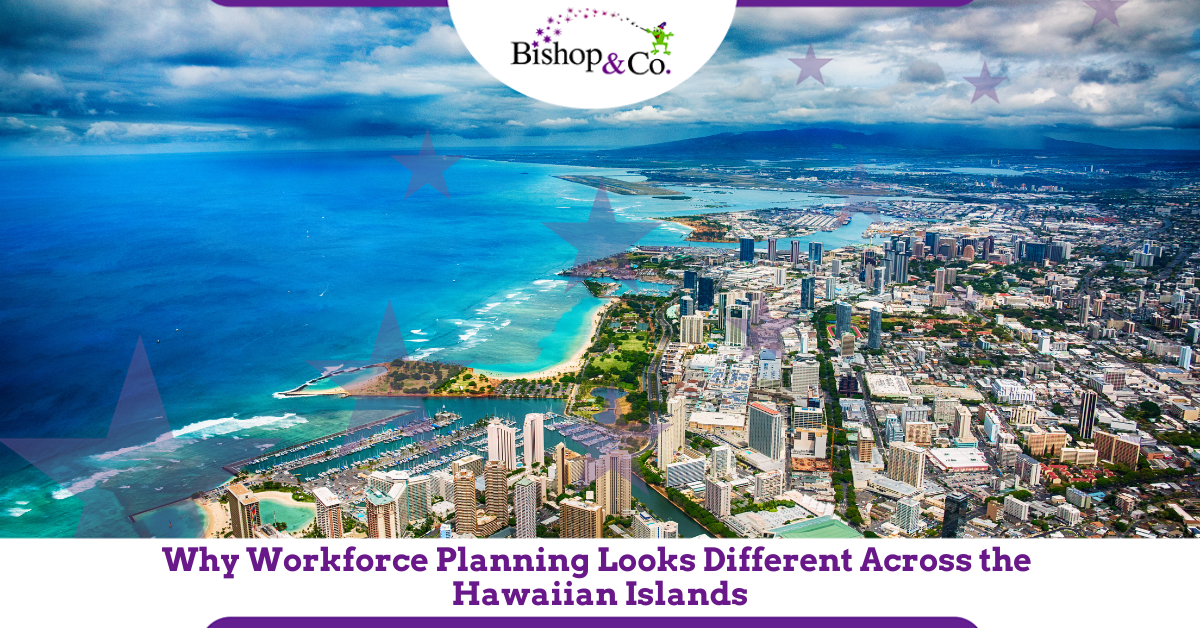
Workforce planning is an important part of every organization’s long-term success. It helps businesses prepare for growth, identify future hiring needs, and ensure they have the right people in place to achieve their goals.
In Hawaiʻi, however, workforce planning involves more than forecasting staffing needs. Each island has its own industries, labor market conditions, workforce availability, and hiring challenges. Organizations that recognize these differences are often better positioned to attract and retain the talent they need.
Understanding the local workforce landscape allows organizations to make more informed hiring decisions and build strategies that support sustainable growth.
Every Island Has Its Own Workforce Dynamics
While Hawaiʻi is often viewed as a single market, each island operates within its own economic and workforce environment.
Oʻahu serves as the state’s largest employment center with a broad mix of industries and professional talent. Neighbor islands may have smaller labor pools, different industry concentrations, and unique workforce needs shaped by their local economies.
Because of these differences, hiring strategies that are successful in one location may not produce the same results elsewhere.
Industry Demand Varies by Location
The types of professionals organizations need often depend on where they operate.
Healthcare, technology, finance, construction, hospitality, nonprofit organizations, and government agencies each experience different workforce demands across the islands. Local economic priorities, infrastructure projects, and community needs all influence the availability of talent.
Understanding these regional differences allows organizations to develop hiring plans that reflect the realities of their local market rather than relying on statewide assumptions.
Recruitment Strategies Should Reflect Local Conditions
Successful workforce planning considers more than open positions.
Organizations should evaluate where qualified candidates are likely to come from, how competitive the market is for specific skill sets, and whether hiring timelines may vary based on location or role.
Building flexibility into a hiring strategy allows organizations to respond more effectively as business needs change while remaining competitive in attracting top talent.
Workforce Planning Is About More Than Filling Positions
Strong workforce planning focuses on the future as much as the present.
Organizations that regularly evaluate workforce trends, leadership needs, succession planning, and future skill requirements are often better prepared to adapt as their business evolves. Rather than reacting to vacancies, they are making intentional decisions that support long-term organizational success.
A thoughtful workforce strategy helps reduce hiring disruptions while creating greater stability for both employees and the organization.
Local Knowledge Makes a Difference
No two organizations are exactly alike, and neither are Hawaiʻi’s labor markets.
Working with a partner who understands the nuances of hiring across the islands can provide valuable insight into local talent availability, market conditions, and recruiting strategies. This knowledge helps organizations make informed decisions that align with both their immediate hiring needs and their long-term workforce goals.
Looking for Talent Across the Islands?
Bishop & Company has helped organizations across Hawaiʻi navigate the unique challenges of hiring in local markets for more than 20 years. Whether you’re growing your team on Oʻahu, expanding to a neighbor island, or planning for future workforce needs, our local expertise can help you find the right talent with confidence.
Contact Bishop & Company today to discuss your hiring goals and build a workforce strategy designed for Hawaiʻi.


Leave A Comment